
DOS
Department of InformaticsDistributed Operating Systems (DOS)
Photo: UHH/Denstorf
16 April 2026, by Alhassan Abdelhalim
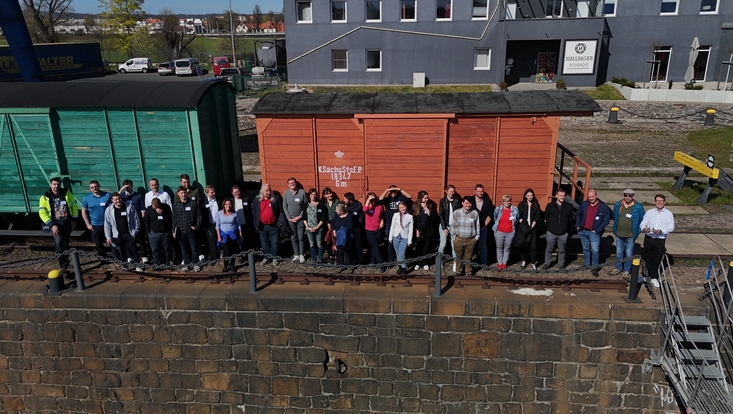
Photo: Janick Edinger
The research project InteGreatDrones (IGD) has presented its results, showing how drones, artificial intelligence and digital twin technologies can help modernize inland and multipurpose port terminals. The project focuses on a key challenge in port logistics: making terminal processes more transparent, efficient and digitally connected without relying on expensive fixed sensor infrastructure.
Coordinated by Sächsische Binnenhäfen Oberelbe GmbH (SBO) together with partners including Syntax Systems, the University of Hamburg, and the Institute of Maritime Logistics at TU Hamburg, InteGreatDrones explored how autonomous drone systems can support everyday port operations. The project was funded by the German Federal Ministry for Transport under the IHATEC programme for innovative port technologies.
At the presentation, the consortium demonstrated how drone-based monitoring can create a real-time overview of terminal areas. Instead of depending on stationary cameras or manual inspections, drones can capture images from flexible perspectives and transform physical objects such as containers, trailers, cranes and vehicles into digital information. This data can then be used in applications such as operations dashboards, digital twins and storage-space optimization tools.
A central achievement of the project is the combination of computer vision and drone imagery for the identification of containers and semi-trailers. The project developed methods for detecting and reading identification codes from drone images, helping terminals understand where loading units are located and how they move through the yard. In one scientific contribution, the team presented a two-step recognition approach that first detects the text area and then reads the ID using optical character recognition, reaching promising results even under challenging real-world port conditions.
The project also produced a broad scientific and educational impact. 27 student theses from the University of Hamburg and the Institute of Maritime Logistics contributed to topics such as object detection, georeferencing, digital twins, process mining, storage strategies, synthetic data generation and drone integration in port processes.
Beyond individual research results, InteGreatDrones shows how smaller and medium-sized terminals can benefit from digitalization without needing the costly infrastructure often found in large seaports. By using mobile drone systems, edge and cloud computing, and privacy-preserving image processing, the project offers a flexible approach that can adapt to changing cargo types, terminal layouts and operational needs.
With its results, InteGreatDrones contributes to the digital transformation of inland ports and strengthens the role of innovative technologies in sustainable and efficient logistics. The project demonstrates that drones are not only flying cameras, but potential digital assistants for future port operations—helping terminals monitor processes, reduce manual effort, improve data quality and make better operational decisions.

Photo: Janick Edinger
Preparations for the final InteGreatDrones presentation

Photo: Janick Edinger
Preparations for the final InteGreatDrones presentation

Photo: Janick Edinger
final preparations before the presentation start

Photo: Janick Edinger
Opening statement by the SBO director in-chief Heiko Loroff

Photo: Janick Edinger
IGD final presentation

Photo: Janick Edinger
IGD final presentation
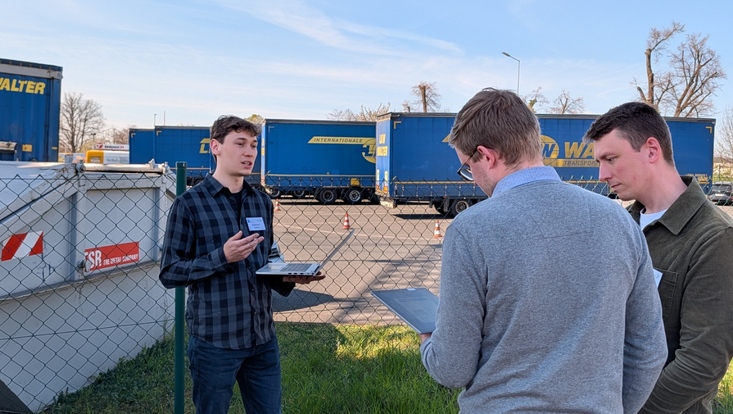
Photo: Alhassan Abdelhalim
Our team presents a live demo in the Albert port in Dresden

Photo: Alhassan Abdelhalim
Our team presents a live demo in the Albert port in Dresden

Photo: Janick Edinger
Our team presents a live demo in the Albert port in Dresden
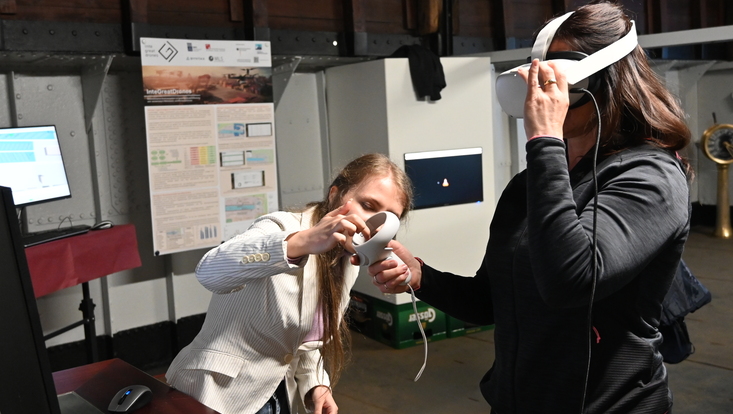
Photo: Janick Edinger
After the live demo, participants try out different artefacts and discuss posters

Photo: Janick Edinger
Our partners from the Maritime Logistics Institution presented their posters and Artefacts in the event
Photo: Janick Edinger
Our drone takes a group photo of the event participants

Photo: Janick Edinger
This concludes 3 years of InteGreatDrones

Photo: Alhassan Abdelhalim
This concludes our inteGreatDrones presentation with great anticipation to what comes next!

